People
Technology Development Begins with People
The Growth of Engineers Who Never Give Up—and Gaining Certainty in 2nm Advanced Semiconductor Development
Rapidus is advancing at an extraordinary pace toward the mass production of the world's most advanced 2nm semiconductors. With mass production scheduled to begin in fiscal year 2027 and the pilot line having started operation in April 2025, time is of the essence. What supports the successful completion of this extremely challenging development within such a short time frame, are the engineers working on the front lines. Shigehiro Fujino, senior executive officer and deputy director of the Rapidus Engineering Center, shares the story of their struggles, growth and the path that led to confidence in achieving 2nm technology.
Career Path and Technical Goals Expected by the Company
――Can you tell us about your career and what Rapidus expected from you?
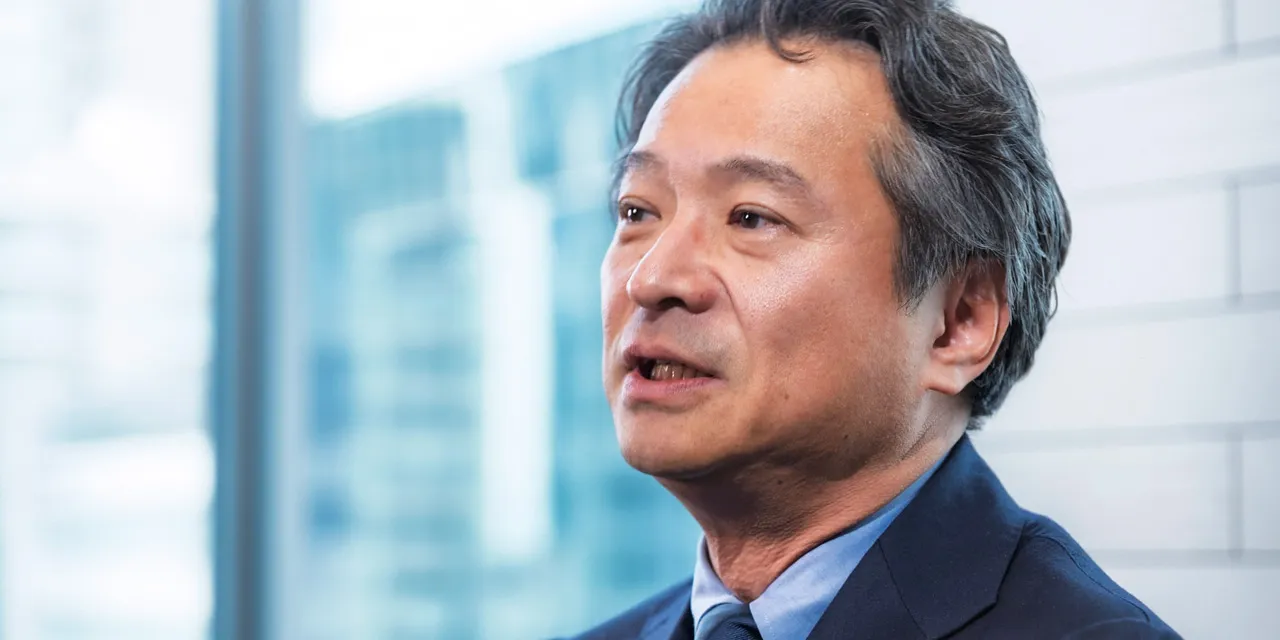
I come from a background in materials science. After working at a company in South Korea, I went to the United States to pursue my Ph.D. After earning my doctorate, I joined my previous employer—a flash memory manufacturer—because I was told I would be directly involved in materials development.
At the time, the company was still a small venture. It later formed a joint venture with a major Japanese manufacturer and established operations in Yokkaichi, Mie Prefecture.
After joining Rapidus, I was given two missions.
The first was to learn the gate-all-around (GAA) technology developed by IBM and establish the corresponding manufacturing processes for Rapidus. The second was to transfer the technology established at IBM's research facility in Albany, New York, to IIM-1 in Chitose, Hokkaido, and make it ready for production.
IBM's cooperation was essential to achieving this, and my experience in joint ventures is what led to my selection for this role.
Engineer Development Through Collaboration with IBM
――What do you tell engineers when they are first dispatched to Albany?
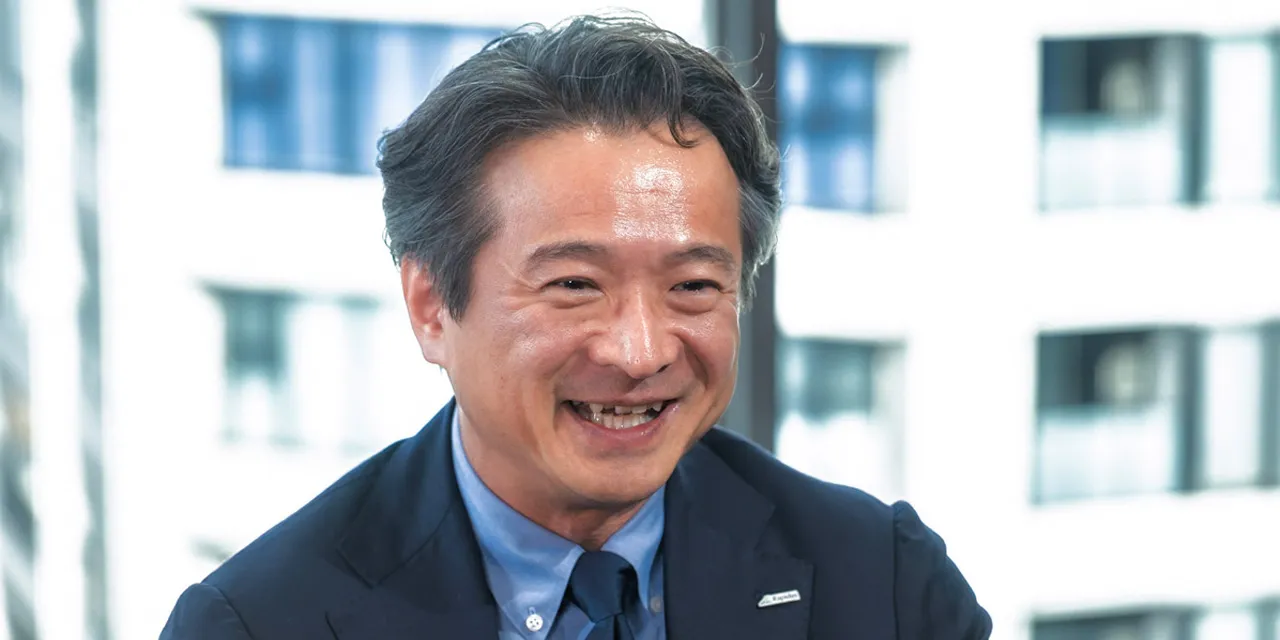
I always talk about three things: integrity, respect and perseverance.
Integrity means being honest with data and results. People sometimes feel tempted to make themselves look better, but I emphasize the importance of reporting results exactly as they are.
Respect is equally important. Achieving results requires cooperation with other engineers. Since someone else's success ultimately leads to your own success, I ask engineers to approach their work with a strong spirit of collaboration.
Perseverance might better be described as grit—the ability to persist until success is achieved. An engineer's job is to make what was once impossible possible, so I stress the importance of continuing until you grasp success.
――For many engineers, collaboration with IBM must have been a first-time experience. What kind of support did you provide?
The engineers assigned to Albany came from a wide range of backgrounds in terms of age and specialization. To move the project forward, we needed everyone aligned in the same direction.
After clearly showing that direction, I told them, "I want you to think for yourselves about what needs to be done and act accordingly."
IBM's cooperation was indispensable. To break down organizational barriers and truly function as one team, we named the project Titans, after a famous movie. We deliberately avoided dividing roles between Rapidus and IBM so that we could advance development as a single team.
We also arranged desks in an island layout, commonly seen in Japanese companies, to encourage open communication.
――For Japanese engineers, the language barrier can be a major challenge. What was necessary to overcome it?
You must never give up, and you must persist in communicating your own opinions.
At first, your English may be limited, and you may think you have communicated your point. However, to truly convey your opinion, you need to keep at it—sometimes repeating yourself several times. Only after that should you consider whether the issue lies with your own understanding or with the other person.
Through trial and error, opportunities for communication increase. That leads to the next action and creates a positive cycle. This is not limited to English—engineers who deliver results are those who persistently repeat their efforts.
When Confidence Turned into Certainty in 2nm Development
――Can you share an example that left a strong impression during the challenges leading up to 2nm development?
The most memorable moment occurred in July 2024.
At that time, we were forced to significantly revise our development strategy. We had to choose whether to pursue both the existing and new approaches in parallel, or to integrate them into a single approach.
The engineers made a committed decision themselves, fully aware of the risks, and chose the latter. Despite the limited time remaining, they ultimately achieved the required results within the deadline.
Had we pursued two approaches in parallel—one led by Rapidus and the other by IBM—the team we had built might have fallen apart. The engineers were able to make this decision because they shared a clear understanding that the goal was to develop the world's most advanced 2nm semiconductors at IIM-1. This achievement was possible only because we came together as one team—Titans.
――At what moment did you feel confident that 2nm development using Rapidus' unique approach was on track?
First, we confirmed transistor performance in Albany. At that moment, I felt that the core technology had been established.
Beyond that, we had a critical milestone to achieve by March 2025. When we reached it, my confidence deepened further.
Another major milestone was the Soul Lot, announced on July 18. We developed GAA transistors at IIM-1 and confirmed that their characteristics met expectations.
Four engineers who joined the company after completing their doctoral programs in 2024 returned to IIM-1. When I asked them, "Can you really make 2nm semiconductors?" they answered clearly, "You don't need to worry. We will see this through to the very end." Hearing that from engineers who had once seemed uncertain made everything feel attainable.
Engineers Grown in New York Shine at IIM-1
――Can you tell us about the engineers' achievements during the manufacturing of the Soul Lot?
First, I must express my gratitude to all the partners involved. The construction company that built IIM-1, the equipment manufacturers who installed tools and the materials suppliers who provided essential materials—all played vital roles in completing the Soul Lot.
Within Rapidus, the process engineers worked particularly hard. Producing 2nm semiconductors involves processes such as film deposition, lithography, etching and polishing. Each process has dedicated engineers, and their dedication truly stood out.
In December 2024, the EUV lithography equipment arrived from ASML in the Netherlands—like a long-awaited Christmas gift. However, production requires many other tools as well. Within just two and a half months, we installed more than 200 pieces of equipment and brought them online—making it possible to run lots, all without major incidents.
I am deeply grateful to the process engineers who made it possible to begin lot operations on April 1, 2025, exactly as planned.
――Do you have any memorable examples regarding the growth of engineers dispatched to New York?

Two engineers, in particular, exemplified the remarkable growth we witnessed through this project.
The first was an engineer who was entrusted with full responsibility for overseeing prototype operations while an IBM team member was away on a week vacation. This role required sound judgment, focus and a strong sense of ownership, which he embraced the opportunity with immense commitment.
Reflecting on the experience, he later told me, "At Rapidus, the value of even one second feels completely different. I can truly feel myself growing at an incredible pace." To me this really drove home, that by being given responsibility at a critical moment and delivering results within a limited time frame significantly accelerated his development as an engineer.
The second was a manager who demonstrated impressive growth over the course of his assignment.
From the early stages, he approached his role with a strong desire to improve the working environment and strengthen the team.
As the engineer responsible for lithography, he returned early to IIM-1 and, just as he had confidently stated—"We have built a strong team and we will run lots as scheduled on April 1."—We accomplished this and proudly carried out Japan's first EUV lithography exposure.
Beyond this technical achievement, he consistently recognized the contributions of those around him, saying, "This success was made possible by the engineers from the equipment manufacturer and by team members who prioritized the analysis of our lots." Through his deep engagement with the project, he grew into a leader who actively fosters collaboration and values the collective strength of the team.
Future Outlook and the Mindset Needed for Success
――What would you like to focus on going forward?
Our primary goal is to begin mass production of 2nm semiconductors in fiscal year 2027. Beyond that, we aim to connect this achievement to mass production of the next generation of semiconductors.
We have established a roadmap for the next ten years, but the challenge of racing against time never disappears.
IIM-1 is a fab that enables the world's fastest production of advanced semiconductors through AI. Leveraging this strength, we are considering the development of a Virtual Fabrication Process. By fully utilizing simulations to predict semiconductor performance before production, we expect to reduce production time by 30 to 40 percent. Our goal is to complete basic development within three years and achieve practical application within five years.
――What do you value most in developing engineers who succeeded in prototyping within such a short period?
Through the successful Soul Lot prototype and gaining certainty in 2nm production, I realized that miracles are not something that simply happens—they are created. And it was engineers with passionate commitment who created this miracle.
What must never be done in engineer development is damaging an engineer's confidence. Challenges inevitably bring failures, but if a supervisor criticizes an engineer by saying, "Why can't you do this?" the engineer becomes discouraged and stops taking on challenges.
Innovation is not driven by factories or equipment. Ultimately, it is driven by people—engineers.
――You seem to enjoy challenges. How do you maintain motivation? And how do you apply that to organizational management?
No matter how difficult the situation, you have to endure it, share the facts with your team with a smile and solve problems together. It is precisely because the situation is difficult that people grow, and that is what gives challenges their value.
I like the phrase, "Do or do not. There is no try." When you decide to do something, you commit to it and see it through to the end.
I want engineers to become people who can work—but not people whose lives are only about work. About 150 engineers were assigned to Albany. Including their families, roughly 500 people moved to the United States.
We are able to work with smiles because we have families who support us.
Rapidus can realize the convenient and prosperous future we envision thanks to engineers who absolutely never give up. Looking ahead toward mass production in 2027, we will continue advancing technology at extraordinary speed together with engineers who embody integrity, respect and perseverance.
It refers to the very first prototype wafer produced at IIM that Rapidus constructed entirely from scratch in its challenge to achieve the world's most advanced 2nm (nanometer) node semiconductor production. We successfully verified our 2nm GAA transistor operation from the first wafer. It is not just a prototype. It is a crystallization of challenge, passion, and unity of all the Rapidus employees.
A doctoral degree. It can only be obtained by conducting research in a specific academic field, writing a dissertation and passing examination. It's the highest degree in that field.
A transistor with a three-dimensional structure where the channel portion is formed into nanosheets or nanowires and the gate electrode surround the channel from all sides. Multiple channels are stacked in the vertical direction, allowing gate electrode control (switching) from all around the channel.
- #Interview
- #Shigehiro Fujino
- #GAA
- #IIM


Recommendation