
Technology
The Core of the AI PC: NPUs Enabling a Richer, More Convenient Society Without Cloud Dependence
In recent years, AI PCs have become increasingly common. An AI PC is a personal computer equipped with a dedicated semiconductor chip called an neural processing unit (NPU), designed specifically for AI inference. By integrating an NPU, AI PCs enable fast, power-efficient AI processing directly on the device.
This article explains the role and benefits of NPUs—the core of the AI PC. Key advantages include real-time AI processing without relying on the cloud, enhanced privacy protection and improved battery life. It also introduces how Rapidus' technological initiatives contribute to the advancement of the AI PC era.
What Is an AI PC? Three Benefits of NPUs
An AI PC is defined by the presence of an NPU optimized for AI inference. With an NPU, AI capabilities become more personal, more responsive and more intelligent.
Core Elements of an AI PC
If the central processing unit (CPU) serves as a general-purpose command center, and the graphics processing unit (GPU) excels at graphics and parallel computation, the NPU specializes in AI inference processing.
NPUs incorporate dedicated computational units required for AI workloads. By using lower-precision arithmetic—such as 4-bit or 8-bit operations—they maintain sufficient accuracy while dramatically improving processing speed and energy efficiency.
NPUs are typically integrated on the same chip as CPUs and GPUs within a system-on-chip (SoC) architecture, functioning as an additional processing brain within the device.
How AI PCs Differ from Traditional PCs
The key distinctions between traditional PCs and AI PCs lie in two areas:
- Whether a dedicated AI processor is present
- Where AI processing takes place
| Category | Traditional PC (Non-AI PC) | AI PC (NPU-Equipped) |
|---|---|---|
| Main AI Processing | CPU or GPU handles AI tasks generically | NPU handles most AI inference |
| Processing Location | Primarily cloud-based (internet required) | Many AI tasks run on-device (edge) |
| Power Efficiency | High power consumption during AI tasks | Significantly lower power consumption |
| Real-Time Response | Network latency may occur | Near-instant response |
Traditional PCs often depend on cloud servers for complex AI processing, requiring significant data transmission. In contrast, AI PCs equipped with NPUs can execute many AI workloads locally, enabling high-speed processing without constant internet connectivity.
In some cases, power consumption can be reduced to less than half compared with running equivalent AI tasks on a CPU.
Key Benefits of AI PCs
Privacy Protection and Enhanced Security
Because AI processing occurs on-device, sensitive information and personal data do not need to be transmitted externally. This significantly reduces the risk of cloud-based data leakage.
In healthcare, diagnostic data and genetic information can remain within the device, supporting compliance with privacy regulations. In finance, transaction records and customer asset data can be processed locally, reducing security risks and protecting institutional trust.
For individual users, facial recognition and biometric authentication can be completed entirely on-device, ensuring that private images are not uploaded to cloud servers.
Improved Battery Life
NPUs enable high-speed AI processing with low power consumption, extending battery life during AI-intensive tasks. Even when frequently using AI features while traveling or working remotely, users can operate for longer periods without concern for battery depletion.
In contrast, traditional PCs often experience rapid battery drain when executing AI workloads on CPUs or GPUs.
Real-Time Performance and Reliability
Cloud-based AI processing can introduce delays ranging from hundreds of milliseconds to several seconds. With on-device inference powered by NPUs, latency is dramatically reduced.
Because AI processing does not depend on network connectivity, AI PCs function reliably even in environments with limited or no internet access—such as underground transit systems or airplanes.
Applications like offline translation and camera-based AI features remain usable anytime, anywhere. Offloading AI workloads to the NPU also frees CPU resources for other applications, enabling smoother multitasking.
AI PC Capabilities Enabled by NPUs and Future Prospects
Enhancing Creativity and Productivity
AI PCs can significantly improve creative workflows. While cloud-based image generation may require noticeable processing time, AI PCs can generate images within seconds. In such cases, the NPU handles most of the workload, while the CPU and GPU remain less utilized.
Everyday AI Applications
AI PC advantages extend beyond business scenarios into daily life.
- Offline translation enables real-time multilingual communication without internet access, improving convenience during travel or overseas business trips.
- On-device smart assistants process voice data locally, ensuring that user speech is not stored on remote servers.

Toward Personalized AI Assistants
AI PCs can leverage accumulated personal data to assist users more efficiently. Natural-language file searches—such as finding meeting materials from last Tuesday—help reduce time spent locating documents.
Looking ahead, combining GPU-based 3D rendering with NPU-based AI inference will enable virtual assistants capable of more human-like expressions and voice interactions. In addition to large language models (LLMs), interest is growing in small language models (SLMs). Although SLMs are smaller in scale, they can achieve high levels of specialization in fields such as healthcare and finance. Because they can operate efficiently on local devices, SLMs can be developed and deployed more quickly and at lower cost.
NPUs are well suited to running SLMs efficiently, enabling specialized AI responses while keeping data on-device.
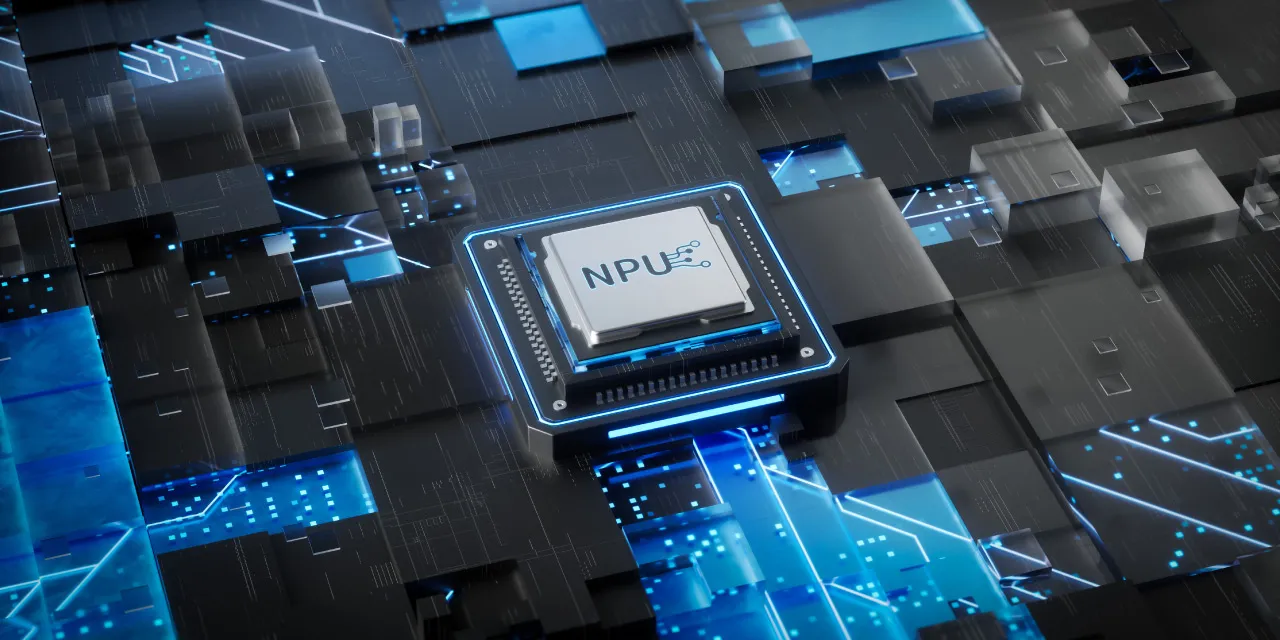
Environmental Impact
AI PCs also offer environmental benefits. Data center power consumption—driven by large-scale GPU deployment—is projected to reach approximately 945 billion kWh by 2030, roughly double 2024 levels.
Reports suggest that NPUs may consume 35–70% less power than GPUs for comparable AI inference tasks. Lower power consumption contributes to reduced CO₂ emissions, making on-device AI processing a more sustainable computing approach.
The Structure of NPUs and Their Performance Advantages
NPUs specialize in inference using trained AI models. By leveraging low-precision arithmetic such as 4-bit and 8-bit operations, they deliver high-speed, energy-efficient processing.
They support smooth, real-time execution of AI applications without burdening users with delays.
(For a detailed comparison between NPUs, CPUs and GPUs, see the related article: “What Is an NPU? Understanding the Differences Between CPUs, GPUs and NPUs.”)
Future Evolution of NPUs
Current NPUs provide processing performance on the order of several tens of tera operations per second (TOPs). Continued improvements are expected between 2025 and 2030, enabling more advanced AI models to operate locally while improving energy efficiency.
Although current NPUs focus primarily on inference, lightweight on-device training—such as transfer learning—may become feasible in the future. This will allow AI models to be optimized directly on personal devices based on individual user data.
Rapidus' Technology Contributing to AI PC Advancement
Rapidus has received technology transfer from IBM in the United States for 2nm semiconductor processes utilizing gate-all-around (GAA) transistors, and is building manufacturing capabilities toward mass production beginning in 2027. This advanced process technology can also be applied to AI PC chips.
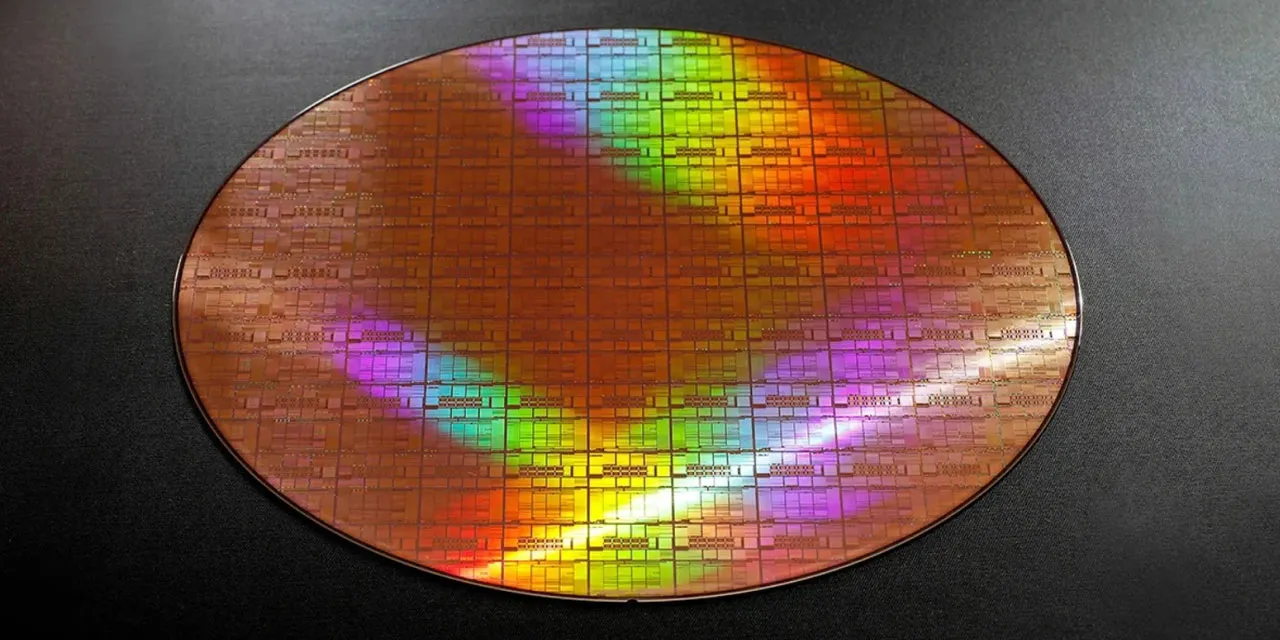
Rapidus adopts a single-wafer processing approach, handling silicon wafers individually. This enables high-mix, custom-oriented production with shorter turnaround times. Because not all advanced semiconductor customers require large-scale mass production, this approach supports flexible manufacturing for niche high-performance products and AI startup prototypes.
Building Toward More Personal and Sustainable Computing
AI PCs have the potential to significantly transform both business and everyday life. By leveraging personal data for fast, power-efficient on-device AI processing, productivity can be improved while simultaneously contributing to lower data center power consumption and reduced CO₂ emissions.
Through the supply of advanced semiconductors—including those used in NPU-enabled systems—Rapidus aims to contribute to a more comfortable and sustainable digital future.
- #Semiconductor
- #Design
- #AI


Recommendation