
Technology
The Future Unlocked by Semiconductors: Innovation Expanding into Tomorrow
Key Points of This Article
- NPU-equipped chips enabling edge AI processing are becoming the backbone of real-time decision-making in autonomous vehicles, healthcare, and smart cities
- SiC and GaN power semiconductors are extending EV range and enabling faster charging, directly advancing carbon-neutral transportation goals
- Semiconductor miniaturization combined with 3D stacking and chiplet integration opens new frontiers in quantum computing and space exploration
Behind virtually every innovation of the 21st century, semiconductors are hard at work. From the instant your finger touches a smartphone screen and AI analyzing massive datasets behind the scenes, to an electric vehicle gliding silently into motion—semiconductors are indispensable.
In recent years, semiconductor technology has moved beyond merely boosting compute performance to a stage where it expands human potential. The evolution of these small chips will profoundly transform next-generation cities, healthcare, mobility and space exploration.
This article traces semiconductors' current role, technical challenges and breakthroughs, while sharing a vision of the future—highlighting the boundless possibilities they enable.
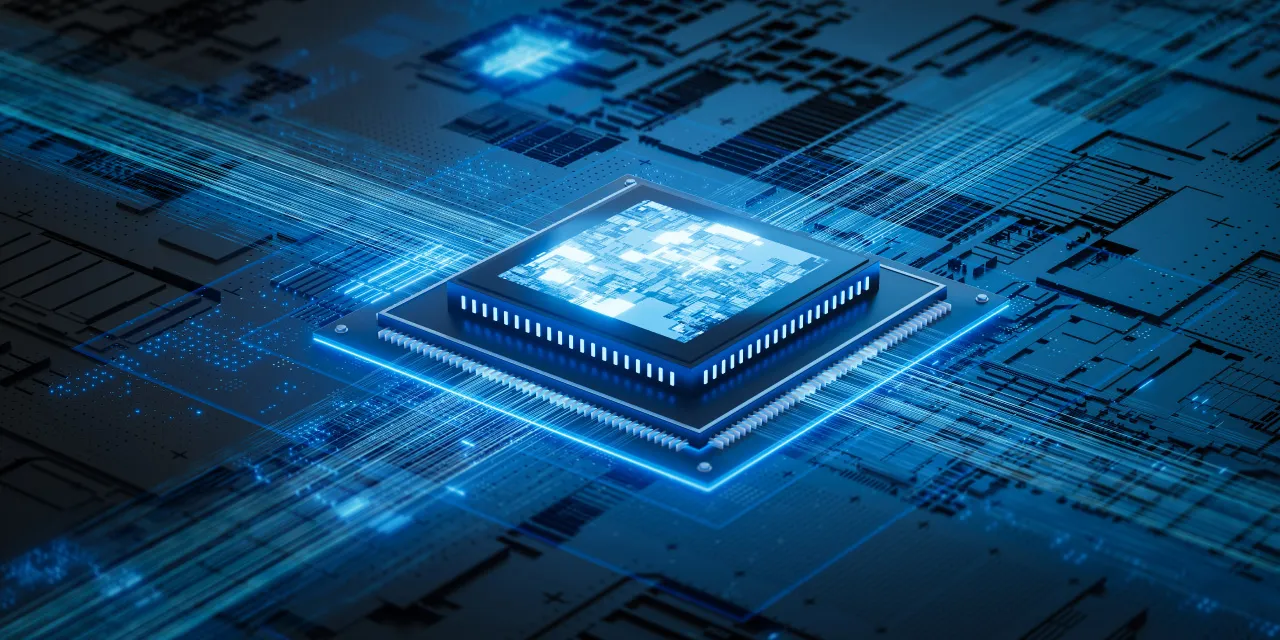
Today's Society, Sustained by Semiconductors
Semiconductors have become the foundational infrastructure of modern life. Smartphones integrate billions of transistors, powering the apps we use every day. In cars, semiconductors are embedded in engine control, driver-assistance systems and the motor drives at the heart of electrification—so much so that cars are now rightly called moving electronic devices.
Cloud computing and data centers also rely entirely on semiconductors. Server-class CPUs, GPUs and memory underpin modern digital services, enabling AI model training and fast search. At home, refrigerators, washing machines and air conditioners are all made more efficient through semiconductor-based control.
Nearly every aspect of daily life is supported by semiconductors.
The Brain of AI
Ultra-High-Performance Chips Powering Generative AI
The practical deployment of large language models (LLMs) like ChatGPT and the rise of generative AI have made human-like content creation possible. LLMs require dedicated AI data centers where training runs on GPUs and AI-specific accelerators optimized for massive parallel computation, while inference relies on fast, power-efficient chips. A key enabler is high-bandwidth memory (HBM), which widens the data pathway to feed these processors efficiently.
As generative AI spreads, demand for data-center GPUs has surged, propelling the AI-semiconductor market into rapid growth. ASICs and AI accelerators, tailored to specific AI tasks, further improve performance-per-watt. In short, advances in semiconductor technology provide the brain of AI, turning sophisticated generative AI into reality.
Edge AI and Real-Time Response
Real-time decision-making at the edge is drawing attention. Traditional AI processing depended on the cloud, with unavoidable latency and security concerns. Now, compact, low-power chips are deployed on devices, processing data in place.
Devices incorporate Neural Processing Units (NPUs) that handle many operations in parallel. NPUs execute voice recognition, on-device vision and real-time translation locally—reducing latency and power, enabling offline use and strengthening privacy.
In safety-critical domains—collision avoidance in autonomous vehicles, anomaly detection in factories and point-of-care diagnostics—instant decisions are essential. Edge AI semiconductors are the keystone to enabling a real-time society.
Transformation in Healthcare and Medicine
Health Monitoring via Wearables
Wearables such as smartwatches highlight continuous biometric monitoring. Thanks to miniaturized, low-power semiconductor sensors, vital data—heart rate, blood pressure and body temperature—is measured and sent via Bluetooth to smartphones or the cloud for tracking.
Key sensors include optical heart rate/blood oxygen via LEDs and photodiodes (PPG), electrodes measuring skin potential (ECG), semiconductor temperature sensors and MEMS accelerometers/gyros. Blood pressure is commonly estimated using timing features such as the time difference between PPG and ECG signals (PTT).
Some wearables feature ECG functions that can flag arrhythmia-like patterns. Clinicians can remotely review data for early detection and intervention. Meanwhile, devices like insulin pumps and patch-type glucose monitors leverage semiconductor integration to become smaller and more precise, empowering patient self-management.
Precision Diagnostics and Personalized Treatment
Semiconductors drive the digitization and acceleration of diagnostics and therapy. In CT, MRI and ultrasound, captured analog signals are digitized and reconstructed by high-performance CPUs/GPUs, with noise corrected and images stored efficiently. Faster, higher-resolution output supports earlier detection and more accurate diagnosis.
Pairing imaging with medical AI—running on GPUs and accelerators—helps detect lesions in large datasets and assess patient-specific risk. In precision medicine, AI and high-performance chips process massive genomic datasets rapidly, aiding therapy selection and side-effect prediction for each patient.

Building a Sustainable Society
EVs and High-Efficiency Power Semiconductors
EV adoption hinges on driving range and charging time—both directly influenced by power semiconductors.
Materials like silicon carbide (SiC) and gallium nitride (GaN) are being adopted in earnest. SiC offers high breakdown field and low loss at high power, sharply cutting inverter switching losses, which extends range and enables smaller, lighter systems. Leading makers already deploy SiC in traction inverters, and many new EVs are expected to follow.
GaN excels at high-frequency, high-speed switching, making it attractive for on-board chargers and DC-DC converters. Together, SiC and GaN dramatically boost power-device performance, improving EV energy efficiency and reducing battery stress—advancing sustainable mobility.
Renewable Energy and Smart Grids
Semiconductors are also essential for maximizing solar and wind. Solar panels produce DC, while homes and factories need AC. Efficient power converters known as inverters—increasingly built with SiC/GaN—minimize conversion losses, ensuring generated energy isn't wasted.
Across the grid, smart-grid deployments integrate ICT with power systems to optimize supply and demand. At their core are semiconductor-driven power-conversion and control technologies. Smart meters and controllers for distributed energy resources use advanced chips to balance loads and reduce waste. AI analyzes data from large fleets of IoT sensors to refine demand forecasts, reduce blackout risks and improve utilization.
In short, semiconductor progress enables efficiency and stability in the energy sector, accelerating the shift to renewables-centered sustainability.

Summary
Within each small chip lies outsized potential to shape the future. Semiconductors not only sustain today's convenient life; they are the key driver of tomorrow's societal transformation.
As seen here—AI's evolution, advances in medicine and a greener energy landscape—semiconductor innovation sits at the core of progress across every field. Simply, future technologies cannot exist without semiconductors.
Looking ahead, semiconductors will advance through quantum computing, next-generation memory and new materials, unlocking possibilities beyond our imagination. Reflecting on their limitless potential, our expectations for the future only grow.
A wide-bandgap semiconductor approach and material providing a higher breakdown field and thermal conductivity than silicon, while offering strong tolerance to high voltage and current. It enables low-loss power devices and is seeing full-scale use in EV inverters and industrial motor drives where high voltage is required.
A wide-bandgap semiconductor approach and material, especially strong in high-frequency switching. It enables high-efficiency, high-power conversion that was difficult with silicon and is already used in compact fast chargers and 5G equipment. Applications in EV on-board chargers and other converters are also anticipated.
- #semiconductor
- #AI
- #autonomousDriving
- #powerSemiconductor
- #EV
- #edgeAI
- #chiplet
- #Rapidus


Recommendation